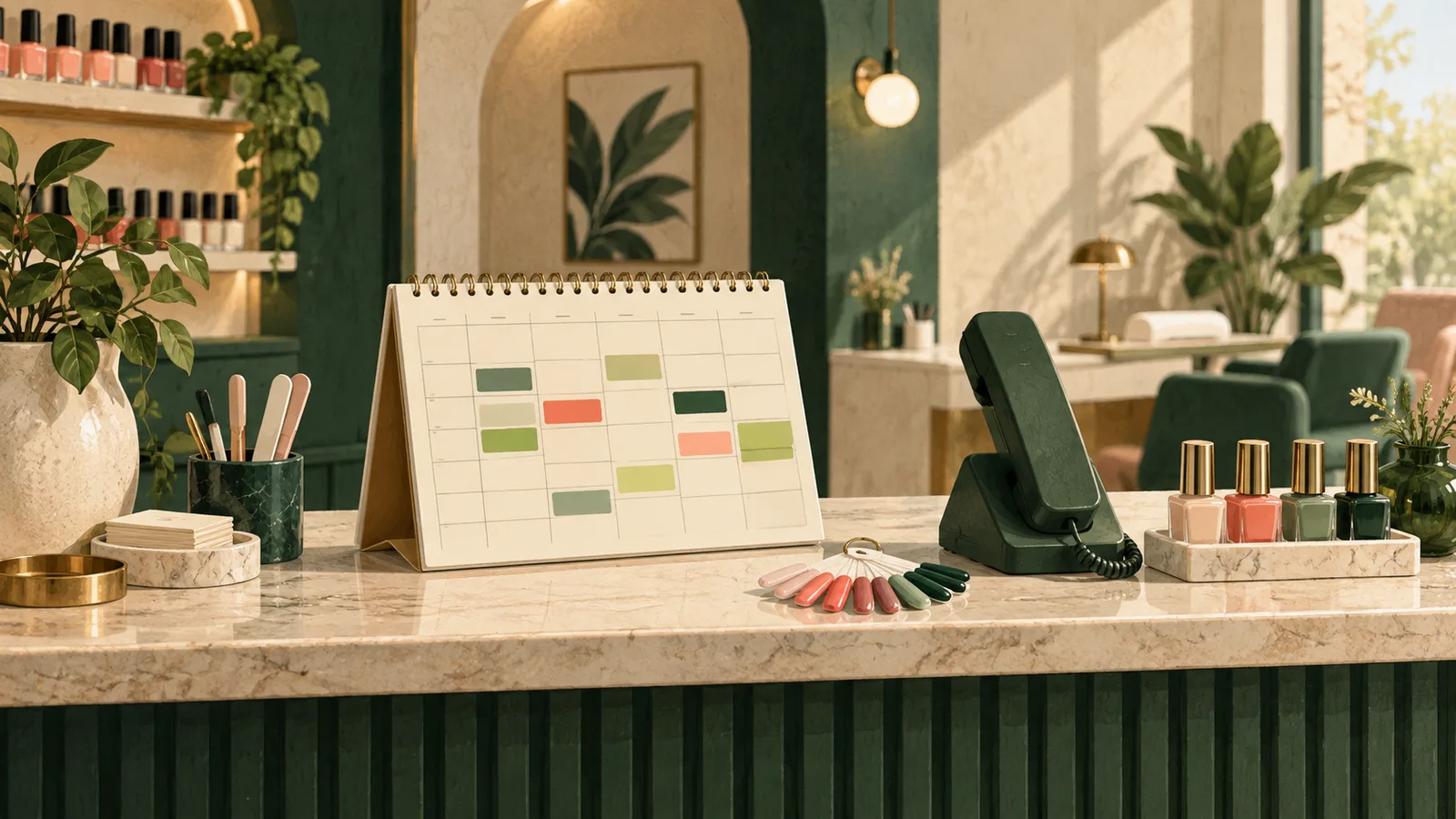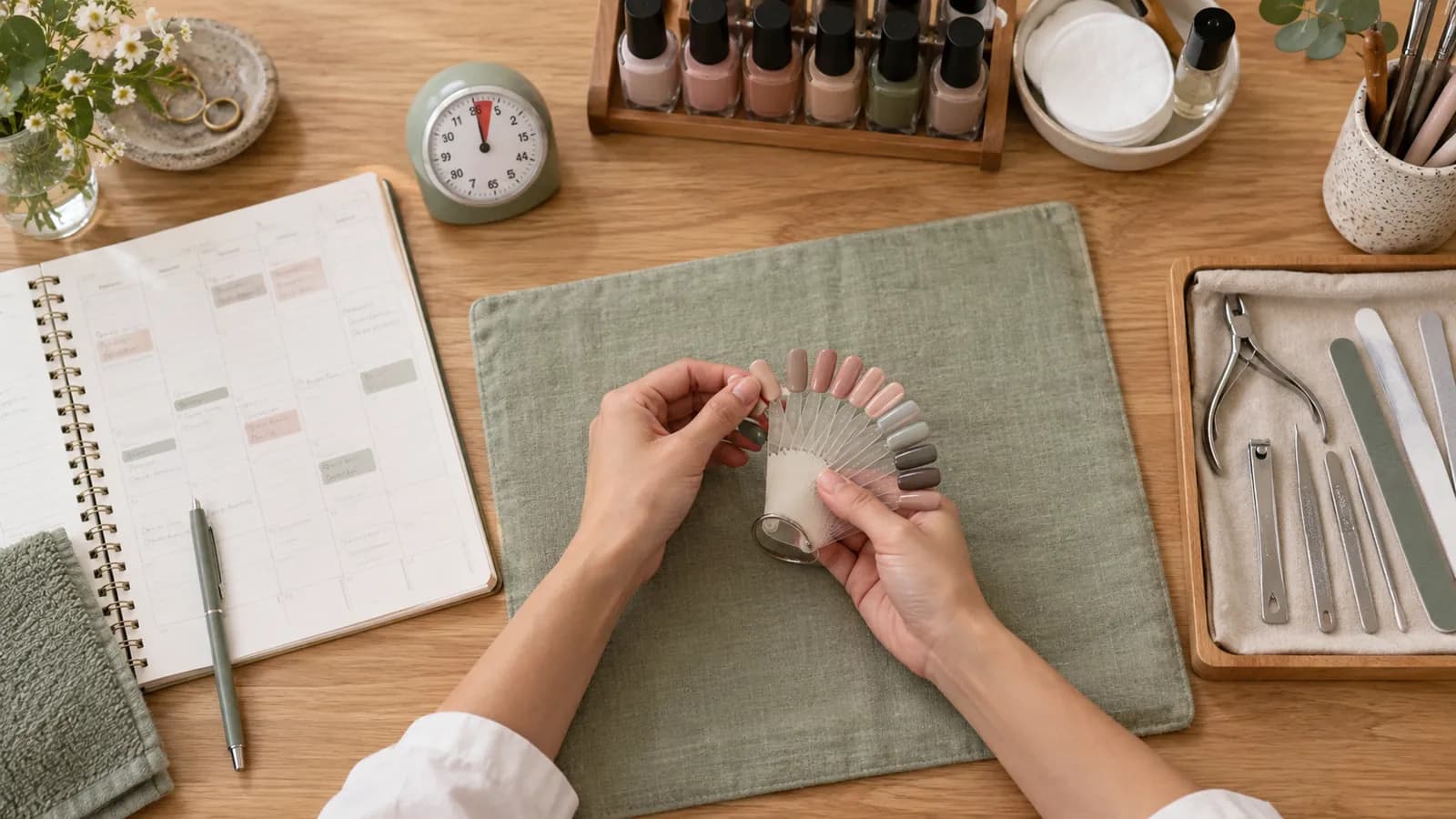
Give every bookable service an approved time rule
A nail salon service menu needs more than names and prices. For accurate booking, each service should have an approved duration, clear removal and add-on rules, qualified technicians, and any required station or cleanup time. If reception cannot translate “gel with a little design” into a reliable slot, the menu is leaving a decision unfinished.
Download the service-duration mapping sheet. Start with the five services your callers ask about most, then review them with the technicians who perform them.
This guide helps owners define the menu data used during a booking conversation. It does not prescribe treatment methods or claim that all technicians should work at the same speed. The broader salon booking guide covers availability and appointment confirmation.
Separate similar names that represent different work
Use a distinct internal service record when the actual work, staff permissions, or duration differs. Clients can still see friendly names, but the front desk should know which selection is being discussed. A fill, a new set, and a removal followed by another service should not become interchangeable because a caller uses the same shorthand.
Write a short explanation of what is included and excluded. If the base service already includes a specific removal step, avoid adding its time again. If removal is separate, explain that before offering an appointment. Make the question easy for reception to ask without requiring the client to know technical product names.
“What would you like done, and is there product on your nails that needs to be removed? If you're not sure what it is, I can ask [technician] to review the request before we choose the appointment.”
Use consultation or staff-review states for requests that cannot be assigned a reliable time from the menu. Do not pick the shortest service just to show an available slot.
Keep the time fields separate enough to avoid double counting
| Field | Question it answers | Common mistake |
|---|---|---|
| Base service | What work does the named appointment include? | Using one label for several different services. |
| Removal | Is it included, separate, or subject to review? | Omitting it or charging time twice. |
| Add-ons | Which designs or extras have an approved duration? | Allowing any design to fit the same short add-on. |
| Technician rule | Who can provide the service, and does approved timing vary? | Treating all staff as interchangeable. |
| Resources and cleanup | Which station is occupied, and for how long? | Ending the reservation when the client leaves. |
Where your booking system represents these fields differently, document the mapping. A single displayed duration may already contain cleanup. Another system may reserve that buffer separately. The office needs to understand the real blocked time, not merely add every number it sees.
Calculate the complete reserved block
Here is a fictional example using salon-approved numbers invented for this guide. A base service takes 40 minutes, separate removal takes 20, an eligible design adds 15, and cleanup reserves another 10. The complete block is 85 minutes: 40 + 20 + 15 + 10.
A 3:00 p.m. start therefore occupies the technician and required station until 4:25 p.m. A 4:00 appointment behind it creates a conflict even though the base service looks short enough. If removal was already included in the base service, the calculation would need to change. Label that inclusion in the menu rather than expecting reception to remember it.
In this example, a caller with only a 60-minute opening cannot receive a confirmation for the 85-minute block. Staff can review an approved alternative, another time, or a consultation. The client should choose with accurate information; the receptionist should not silently remove requested work.
For connected appointments, apply the block to the whole plan. A longer first service can move the next guest's start. The group booking checklist shows that dependency in a three-person example.
Use your own records to improve the menu
Review a manageable sample of appointments with your team. For each, compare the planned service, actual agreed work, expected duration, actual timing, and any cause of delay. Use anonymized summaries for the review. Do not assume an overrun proves a technician worked too slowly.
- Was removal missing from the original request?
- Did the client change the design after arrival?
- Was a station unavailable even though the technician was free?
- Did an earlier late arrival carry into this appointment?
- Did the menu describe a service differently from the technician?
Group similar work before changing a duration. One unusually complex request should not automatically lengthen every basic appointment. Conversely, repeated overruns with the same reason suggest the menu rule or intake question needs revision. Have the service owner approve the change.
Update every booking channel together
Maintain one current menu version with an owner and review date. Update the calendar configuration, reception sheet, public descriptions, and phone script together. Explain changes to staff before the next busy shift so yesterday's paper guide does not compete with today's booking page.
Review existing future appointments affected by a duration change. Do not silently move a client's time or shorten their service. Assign someone to check the impact and contact the client through the approved process when a change is necessary.
If an assistant or receptionist cannot find a supported service mapping, the outcome should be a staff review request with a response commitment. That exception is part of the design, not a reason to make up a duration.
Bring a clear service map to Turnline
Turnline's planned salon intake focuses on the questions that turn a vague phone request into something your team can review. A service map gives that conversation a useful foundation: what to ask, when to stop for a technician's decision, and what can be handed to the calendar process.
Bring the completed worksheet and one commonly misbooked service to discuss your salon workflow with Turnline. Salon support is in discovery. This inquiry helps scope requirements; it does not claim an active booking integration or instant setup.
Frequently asked questions
How do we calculate a nail service booking duration?
Start with the salon's reviewed base service time and add the applicable removal, art, repair, and cleanup blocks. Check the qualified technician and station, then verify the complete slot against the calendar.
Should every nail technician use the same service duration?
Use rules that reflect the service and the actual team. Review completed appointments and agree on practical scheduling guidance instead of assuming every technician and design takes the same time.
Is cleanup part of the appointment slot?
Reserve the required cleanup and reset time in the scheduling plan. Explain client-facing finish times separately when appropriate so staff do not double-book the station.
How should the desk handle an unclear service request?
Collect the details needed by the salon's process and route uncertain duration or design questions to the designated technician. Keep the request pending until the full service and capacity are confirmed.